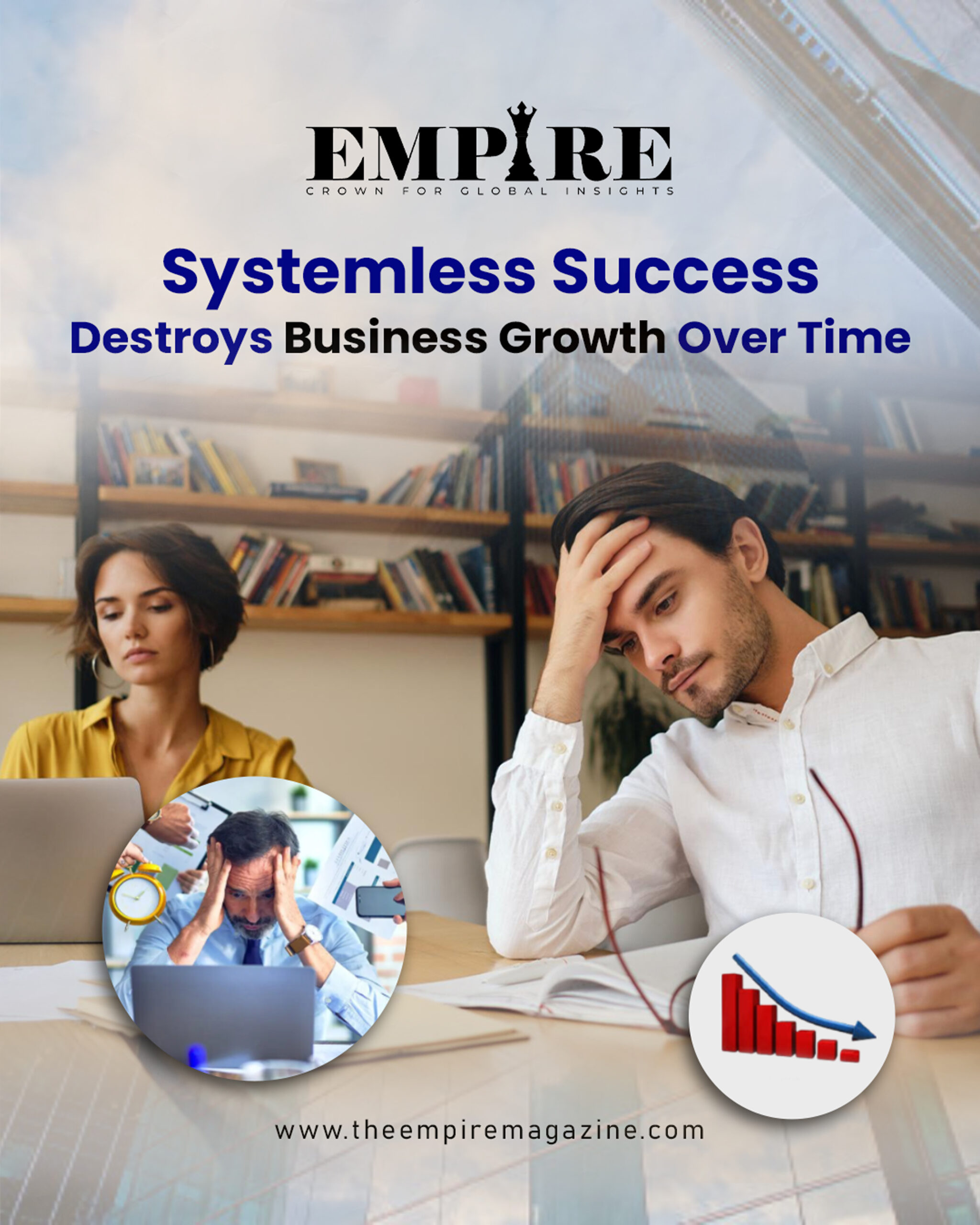
Systemless Success destroys business growth over time when companies scale without processes, causing inefficiencies, lost revenue, and operational chaos.
Systemless Success destroys business growth over time, even when everything appears to be moving in the right direction. Many companies reach a phase where sales increase, customer interest grows, and daily operations become busier than ever. On the surface, this looks like success. But beneath that momentum, a hidden problem often develops—growth without systems.
This phase is one of the most dangerous for any business because it creates the illusion of progress while quietly weakening the foundation. Without proper systems in place, companies struggle to sustain their growth, leading to inefficiencies, missed opportunities, and long-term instability.
The Illusion of Growth Without Structure
In the early stages of a business, flexibility and speed are often advantages. Founders handle multiple roles, teams operate informally, and processes evolve organically. However, as the business grows, this lack of structure becomes a liability.
Systemless Success happens when companies continue expanding without building the systems required to support that growth.
At this stage, businesses may experience:
- Increasing customer demand
- Higher revenue inflow
- Expanding teams
- More operational activity
But without systems, these positive signals can hide deeper issues. Growth becomes difficult to manage, and the business starts leaking value in ways that are not immediately visible.
Why Businesses Leak Growth Without Systems
One of the most common mistakes companies make is focusing only on attracting new customers while ignoring what happens after those customers enter the system.
Without structured processes:
- Leads are not followed up consistently
- Customers lose engagement over time
- Communication becomes irregular
- Data is not properly tracked or utilized
These small breakdowns may seem insignificant individually, but together they create a major gap between potential and actual performance.
For example, a business may attract hundreds of new prospects every week but fail to convert or retain a large portion of them. This is not a marketing problem—it is a system problem.
Being Busy Is Not the Same as Being Scalable
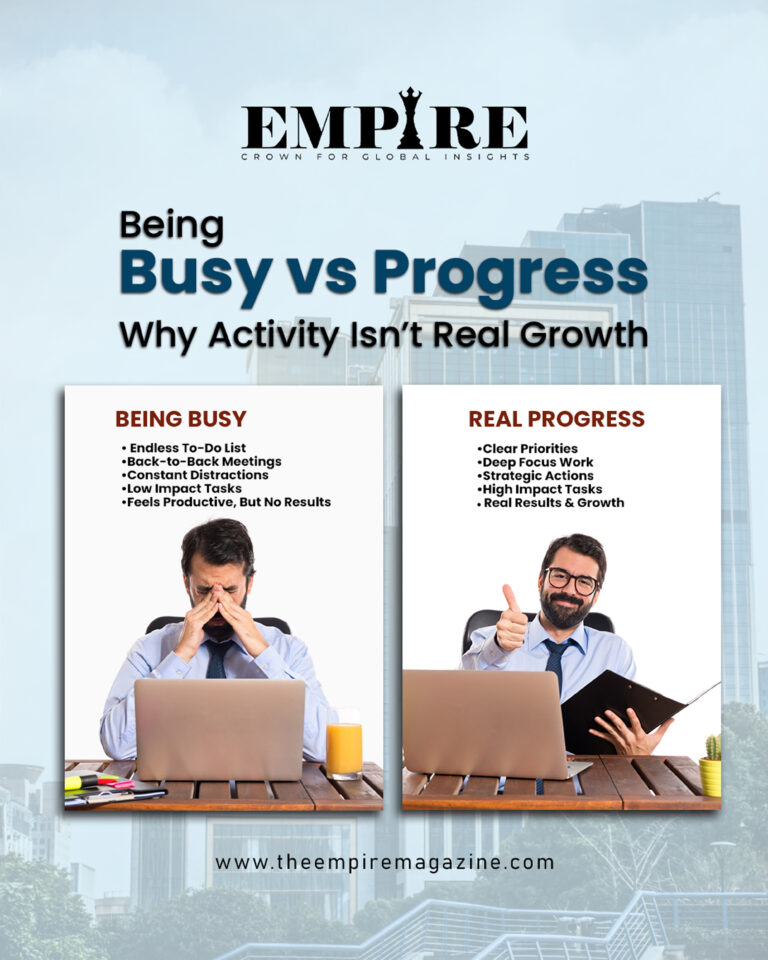
A common misconception in growing companies is equating activity with progress. Teams become busier, workloads increase, and daily operations feel intense. However, busyness does not guarantee efficiency.
In systemless environments:
- Employees rely on memory instead of processes
- Tasks are repeated manually
- Important steps are missed
- Workflows depend heavily on individuals
This creates a fragile structure where people become the system instead of managing it. If a key team member is unavailable, operations slow down or stop entirely.
Scalable businesses, on the other hand, rely on systems that ensure consistency regardless of individual involvement.
The Hidden Cost of Weak Systems
The cost of Systemless Success is rarely obvious. It does not always appear as a single major failure. Instead, it shows up in subtle ways that accumulate over time:
- Missed sales opportunities
- Delayed decision-making
- Inconsistent customer experiences
- Increased employee stress
- Reduced productivity
These issues may not be immediately visible in financial reports, but they significantly impact long-term growth and profitability.
Leadership also pays a price. Founders and managers often spend their time solving operational problems instead of focusing on strategy and expansion. This limits the company’s ability to innovate and scale effectively.
Why Hiring Alone Does Not Solve the Problem
When operational gaps appear, many businesses respond by hiring more people. While additional talent can help, it does not address the root cause if systems are missing.
Without systems:
- New employees struggle to understand processes
- Work becomes inconsistent across teams
- Training takes longer and is less effective
Hiring without systems simply adds more complexity to an already disorganized structure.
True growth requires building processes that allow people to perform efficiently, not just increasing the number of people involved.
The Role of Automation in Modern Business
Automation is often misunderstood as a way to replace human interaction. In reality, its purpose is to enhance efficiency and consistency.
When implemented correctly, automation can:
- Handle repetitive tasks
- Ensure timely communication
- Track customer interactions
- Provide valuable data insights
This allows teams to focus on high-value activities such as relationship building, problem-solving, and innovation.
Automation should not eliminate human connection—it should strengthen it by freeing up time for meaningful engagement.
Systems as the Foundation of Scalability
The key difference between businesses that grow sustainably and those that struggle is the presence of strong systems.
Systems provide:
- Clear workflows
- Consistent communication
- Reliable data tracking
- Defined responsibilities
With systems in place, businesses can handle increased demand without sacrificing quality or efficiency.
Growth no longer creates chaos—it creates opportunity.
How to Fix Systemless Success
Overcoming Systemless Success requires a shift in mindset. Business owners must recognize that growth alone is not enough. Structure is essential.
1. Audit the Customer Journey
Examine every step from initial contact to long-term engagement. Identify where customers drop off or lose interest.
2. Build Repeatable Processes
Create clear workflows for key operations such as sales, onboarding, and customer support.
3. Define Roles and Responsibilities
Ensure every team member understands their role and how it fits into the overall system.
4. Implement Smart Automation
Use tools to handle routine tasks while maintaining a human touch in critical interactions.
5. Track Meaningful Data
Focus on metrics that reflect engagement and outcomes, not just activity levels.
6. Continuously Improve Systems
Regularly review and refine processes to adapt to changing business needs.
The Long-Term Impact of Strong Systems
Businesses that invest in systems gain a significant competitive advantage. They are able to:
- Scale efficiently
- Deliver consistent customer experiences
- Maintain high levels of productivity
- Adapt to growth without losing control
Most importantly, they create a foundation that supports long-term success rather than short-term momentum.
For more insights, visit:
https://theempiremagazine.com/?p=6049
Stay connected:
Instagram: https://www.instagram.com/the_empire_magazine/
Facebook: https://www.facebook.com/profile.php?id=61573749076160
– The Empire Magazine
Crown For Global Insights