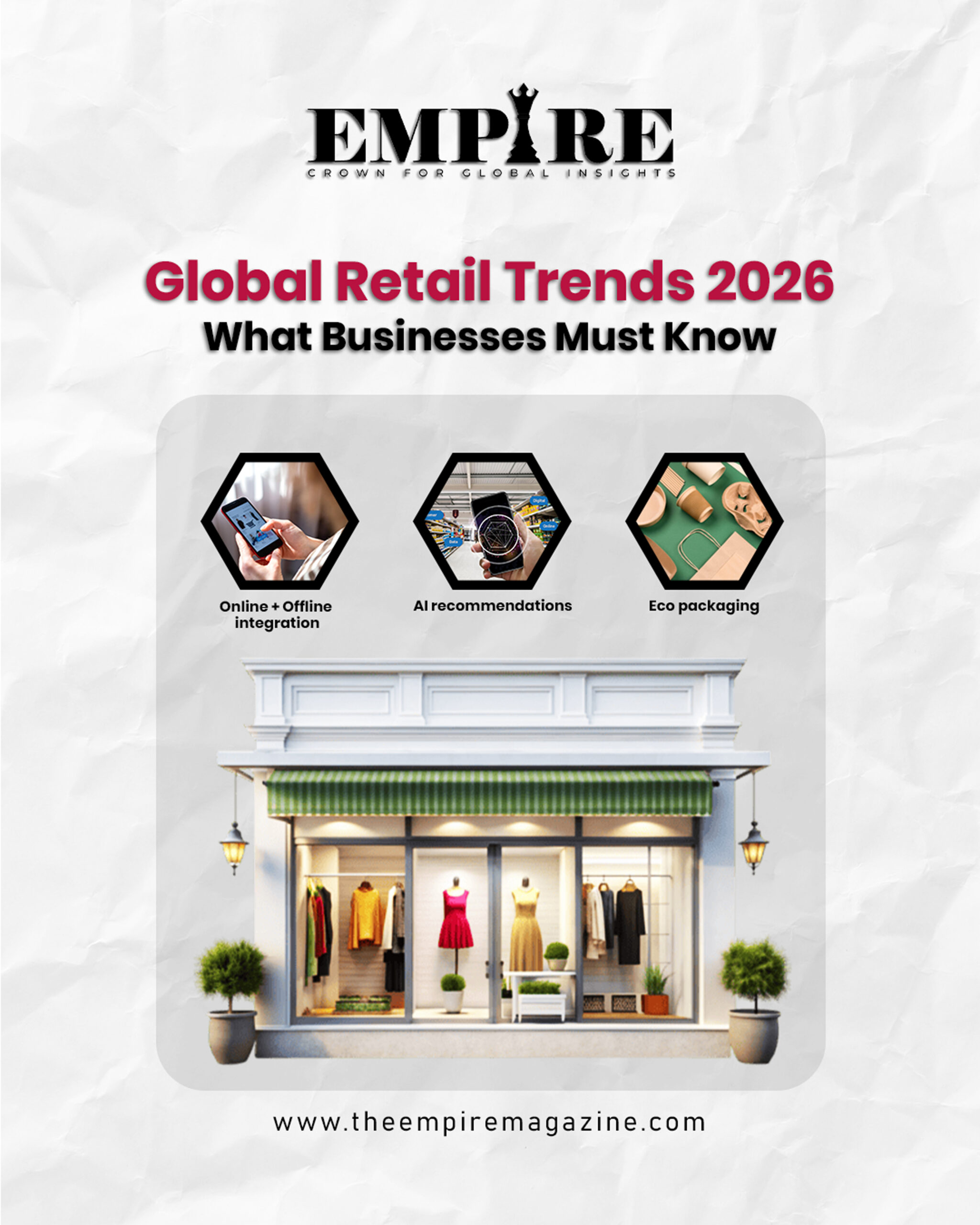
Global Retail Trends 2026 are redefining how businesses operate, compete, and connect with customers in an increasingly digital and experience-driven world. The retail industry is undergoing rapid transformation driven by changing consumer expectations, technological advancements, and global economic shifts. For businesses to remain competitive, understanding these trends is no longer optional—it is essential.
Retail is no longer just about selling products. It is about creating seamless experiences, building strong customer relationships, and adapting quickly to evolving market demands. From e-commerce expansion to personalization and sustainability, the future of retail is shaped by innovation and agility.
The Shift Toward Omnichannel Retail
One of the most important trends shaping the retail industry is the rise of omnichannel retail. Customers today expect a seamless shopping experience across online and offline platforms. They may browse products on a mobile app, compare prices on a website, and complete their purchase in a physical store—or vice versa.
Businesses are investing in integrated systems that allow customers to move effortlessly between channels. This includes features such as:
- Click-and-collect services
- Real-time inventory tracking
- Unified customer profiles
- Consistent pricing across platforms
Omnichannel retail not only improves customer satisfaction but also increases sales by providing more convenience and flexibility.
E-Commerce Growth and Digital Expansion
E-commerce continues to dominate the retail landscape. Online shopping has become a preferred option for many consumers due to its convenience, variety, and competitive pricing. Retailers are expanding their digital presence to reach wider audiences and tap into global markets.
Mobile commerce is also playing a significant role, with more consumers shopping through smartphones and tablets. Businesses are optimizing their websites and apps to ensure fast loading times, easy navigation, and secure payment options.
In addition, social commerce is gaining momentum. Platforms that combine social interaction with shopping are enabling businesses to engage customers directly and drive sales through digital channels.
Personalization and Customer Experience
Modern consumers expect personalized experiences. Retailers are using data analytics and artificial intelligence to understand customer preferences, behaviors, and purchasing patterns.
Personalization can include:
- Product recommendations based on browsing history
- Customized promotions and discounts
- Tailored email marketing campaigns
- Personalized shopping experiences
By delivering relevant content and offers, businesses can enhance customer loyalty and increase conversion rates.
The Rise of Sustainable Retail
Sustainability is becoming a key factor in consumer decision-making. Shoppers are increasingly aware of environmental and social issues and prefer brands that align with their values.
Retailers are responding by adopting sustainable practices such as:
- Eco-friendly packaging
- Ethical sourcing of materials
- Reducing carbon footprints
- Promoting circular economy models
Sustainability is not just a trend—it is becoming a core business strategy that influences brand reputation and customer trust.
Technology Transforming Retail
Technology is at the heart of retail transformation. Innovations such as artificial intelligence, machine learning, and automation are reshaping how businesses operate.
Key technological advancements include:
- AI-powered analytics: Helping businesses predict demand and optimize inventory
- Automation: Streamlining operations and reducing costs
- Augmented reality (AR): Enhancing online shopping experiences by allowing customers to visualize products
- Contactless payments: Providing faster and safer transactions
These technologies improve efficiency, reduce operational costs, and enhance the overall customer experience.
Changing Consumer Behavior
Consumer behavior is evolving rapidly, influenced by digital access, economic conditions, and lifestyle changes. Customers are becoming more informed and selective in their purchasing decisions.
Key behavioral trends include:
- Preference for convenience and speed
- Increased demand for transparency and authenticity
- Greater reliance on reviews and recommendations
- Focus on value rather than just price
Businesses must adapt to these changes by offering products and services that meet customer expectations while maintaining quality and trust.
The Role of Data in Retail
Data has become one of the most valuable assets in the retail industry. Businesses are using data to gain insights into customer behavior, market trends, and operational performance.
With the help of data analytics, retailers can:
- Forecast demand more accurately
- Optimize pricing strategies
- Improve inventory management
- Enhance customer targeting
Data-driven decision-making enables businesses to respond quickly to market changes and stay ahead of competitors.
Global Supply Chain Evolution
Supply chains are undergoing significant changes as businesses strive to become more resilient and efficient. Disruptions in recent years have highlighted the importance of flexibility and adaptability.
Retailers are focusing on:
- Diversifying suppliers
- Investing in local sourcing
- Improving logistics and delivery systems
- Using technology to track and manage supply chains
Efficient supply chain management ensures timely delivery, reduces costs, and improves customer satisfaction.
The Importance of Retail Innovation
Innovation is essential for staying competitive in the retail industry. Businesses must continuously explore new ideas, technologies, and strategies to meet changing demands.
This includes:
- Experimenting with new business models
- Adopting emerging technologies
- Enhancing customer engagement strategies
- Expanding into new markets
Innovation allows retailers to differentiate themselves and create unique value propositions.
You can explore more global business insights here:
👉 https://theempiremagazine.com/?p=5678
The Future of Retail
The future of retail is dynamic and constantly evolving. Businesses that embrace change and adapt to new trends will be better positioned for success. The integration of technology, data, and customer-centric strategies will continue to drive growth and innovation.
Retailers must focus on building strong relationships with customers, delivering exceptional experiences, and maintaining flexibility in their operations. By staying informed about global retail trends, businesses can navigate challenges and seize new opportunities.
Stay connected for more insights:
📸 Instagram: https://www.instagram.com/the_empire_magazine/
📘 Facebook: https://www.facebook.com/profile.php?id=61573749076160
– The Empire Magazine
Crown For Global Insights