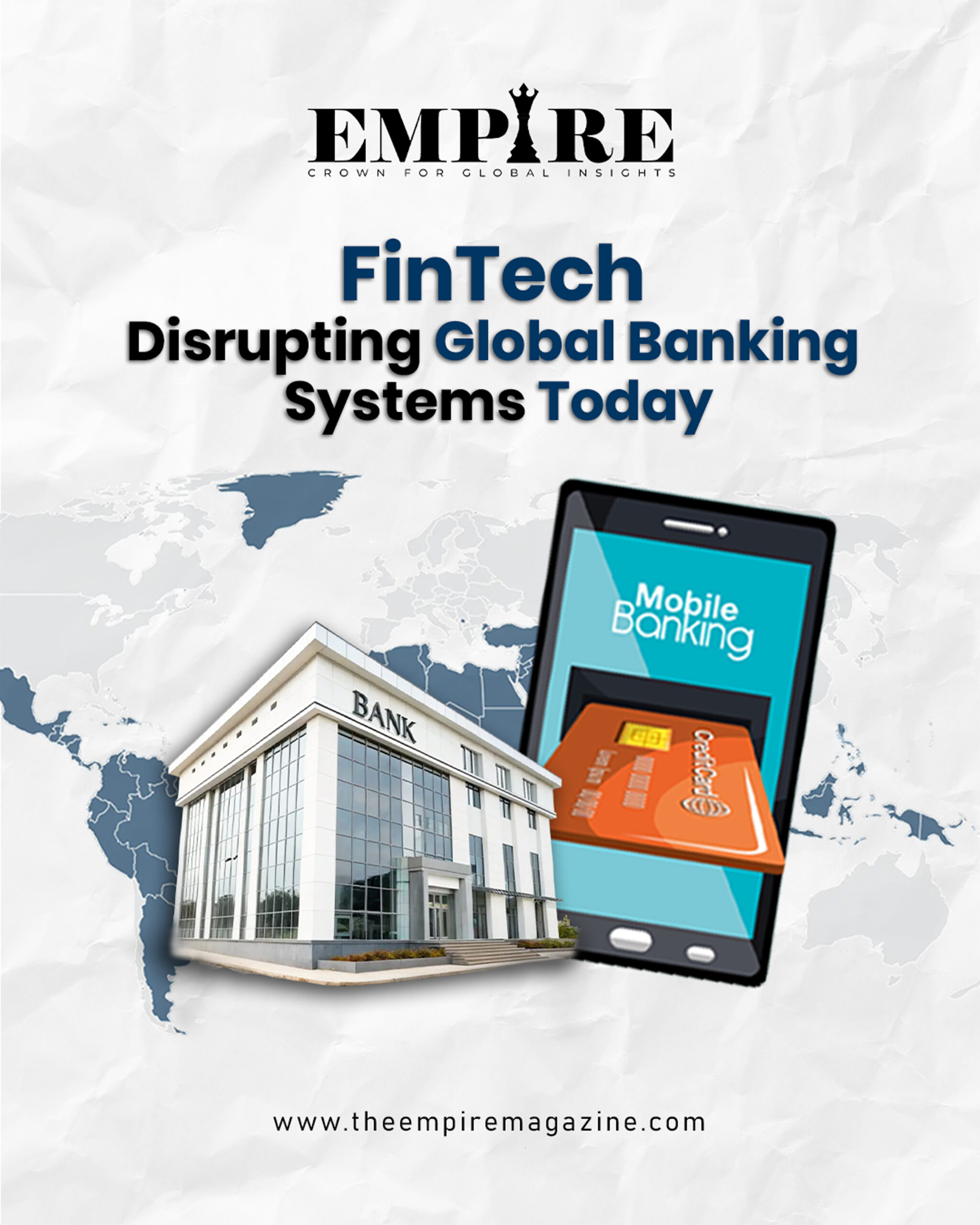
FinTech Disrupting Global Banking Systems is one of the most important shifts in modern finance. Traditional banking once relied heavily on physical branches, long approval cycles, paperwork, and limited customer access. Today, that model is being challenged by financial technology companies that are faster, more flexible, and more focused on digital convenience. From mobile payments to digital lending, FinTech is changing how people manage money, access credit, send payments, and interact with financial institutions.
This transformation is not limited to one region or one type of service. It is happening across developed and emerging economies alike. Consumers now expect instant transactions, personalized financial tools, secure digital platforms, and 24/7 access to services. As a result, the banking industry is being forced to evolve. The old system of waiting in queues, filling out forms, and depending on slow manual processes is losing ground to mobile-first, data-driven, and customer-focused innovation.
The rise of FinTech has created both disruption and opportunity. It is helping millions of people access financial services more easily, while also pushing banks to rethink their role in a digital economy.
What FinTech Really Means
FinTech is the combination of finance and technology. It refers to digital tools, platforms, and services that improve or replace traditional financial processes. These innovations include mobile banking apps, digital wallets, online investment platforms, peer-to-peer payment systems, automated savings tools, blockchain-based services, and AI-driven financial products.
What makes FinTech different from conventional banking is its speed of innovation. Traditional banks often move slowly because of legacy systems, large organizational structures, and regulatory complexity. FinTech companies, on the other hand, are built around agility. They are designed to solve problems quickly, offer smooth user experiences, and meet changing customer expectations in real time.
This does not mean banks are disappearing. Instead, it means the financial ecosystem is being reshaped. Banks are no longer the only gatekeepers of financial access. Consumers and businesses now have more choices than ever before.
How FinTech Is Changing Everyday Banking
One of the clearest examples of FinTech Disrupting Global Banking Systems is the way everyday banking has changed. People no longer need to visit a branch to transfer money, pay bills, check balances, apply for loans, or manage investments. These tasks can now be completed in minutes through smartphones and digital platforms.
This level of convenience has changed customer expectations permanently. Consumers want simplicity, speed, and transparency. They want services that are easy to use and available whenever they need them. FinTech companies understood this earlier than many traditional banks and built their products around user experience.
As a result, even established banks are now redesigning their apps, automating services, and offering more digital tools to remain competitive. In many ways, FinTech has forced the entire banking industry to become more customer-centric.
The Revolution in Payments
Payments are one of the biggest areas where FinTech has made an immediate impact. Digital wallets, instant payment apps, QR code systems, contactless transactions, and online gateways have made money movement faster and simpler than ever before.
This has changed both personal and business finance. Individuals can split bills, send remittances, shop online, and manage subscriptions with ease. Businesses can accept digital payments, reduce cash dependency, and improve transaction efficiency. Cross-border transfers, once expensive and slow, are also being reimagined through digital finance tools.
The payments revolution matters because it touches everyday life directly. When payment systems become faster and more accessible, the entire economy benefits from greater speed and participation.
FinTech and Financial Inclusion
Another major reason FinTech Disrupting Global Banking Systems matters is its role in financial inclusion. In many parts of the world, traditional banking has not reached everyone effectively. Physical branches may be limited, documentation requirements may be restrictive, and account opening may be too slow or costly.
FinTech helps break those barriers. Mobile-based accounts, digital identity tools, low-cost transfers, and simplified onboarding allow more people to access savings, payments, and credit services. This is especially important for small business owners, freelancers, rural populations, and first-time users of formal finance.
When more people gain access to useful financial tools, they can participate more actively in the economy. That makes FinTech not just a business innovation, but also a social and economic one.
Lending Is Becoming Faster and Smarter
Traditional lending often involves paperwork, long wait times, and rigid approval structures. FinTech has changed that by using alternative data, automated risk analysis, and digital application systems to speed up the lending process.
This makes borrowing more accessible for individuals and small businesses that may not fit old banking models. Instead of relying only on conventional credit history, some digital lenders use transaction patterns, cash flow behavior, and other data points to assess risk. This creates new opportunities for people previously underserved by banks.
At the same time, faster lending comes with responsibility. As digital lending grows, trust, transparency, and ethical data use become even more important. The challenge is to combine speed with sound financial judgment.
Artificial Intelligence and Personalized Finance
Artificial intelligence is becoming a major force in financial technology. FinTech platforms use AI to improve fraud detection, personalize offers, automate support, and help users understand spending habits. This has made financial services feel more responsive and intelligent.
Instead of offering the same products to everyone, platforms can now tailor recommendations based on user behavior. That might include smarter savings suggestions, spending alerts, customized insurance options, or investment guidance aligned with customer needs.
This level of personalization is changing the relationship between consumers and financial institutions. People increasingly expect services that feel relevant, proactive, and easy to understand.
Why Traditional Banks Are Being Pressured
The growth of FinTech has placed traditional banks under pressure in multiple ways. First, customers compare digital experiences across industries, not just within banking. If people can order food, book travel, and shop online effortlessly, they expect the same from financial services.
Second, FinTech companies often focus on solving one problem very well. They may specialize in payments, credit, remittances, wealth management, or expense tracking. This focused approach allows them to innovate faster than large institutions that must manage many layers of infrastructure and process.
Third, brand loyalty in finance is changing. Younger users, in particular, are more willing to try new platforms if they offer better convenience and value. This means traditional banks can no longer depend only on legacy trust. They must continue earning relevance.
Collaboration Is Replacing Pure Competition
Although FinTech is disruptive, the future is not only about startups replacing banks. In many cases, collaboration is becoming the more realistic path. Traditional banks bring scale, trust, regulatory experience, and customer bases. FinTech firms bring speed, innovation, and strong digital design.
This combination is creating partnerships, integrations, and hybrid models. Banks are adopting FinTech tools, investing in technology, and partnering with digital providers to improve their services. Rather than being destroyed, many banks are being transformed.
This is an important point. Disruption does not always mean elimination. Often, it means reinvention.
Risks and Challenges of FinTech Growth
Even though FinTech offers many benefits, it also brings challenges. Data privacy, cybersecurity, fraud prevention, digital inequality, and regulatory oversight remain major concerns. A financial system that becomes more digital must also become more secure and more accountable.
There is also the issue of trust. People may adopt digital financial tools quickly, but they still expect reliability and safety when dealing with money. FinTech companies must build confidence through transparency, compliance, and user protection.
The long-term success of this sector depends not only on innovation, but on responsible innovation.
The Future of Global Banking
The future of banking will likely be shaped by a blend of digital access, automation, personalization, and platform-based finance. Branches may still exist, but their role will continue to shrink as digital channels expand. Financial services will become more embedded in daily life, more proactive, and more data-driven.
This transformation is already influencing how people learn about money, how businesses manage operations, and how institutions design financial products. To explore broader insights on digital transformation and global change, read more here:
https://theempiremagazine.com/?p=5655&preview=true
Conclusion
FinTech Disrupting Global Banking Systems is not a passing trend. It is a deep and lasting shift in how finance works. It is making services faster, broader, smarter, and more accessible. It is forcing banks to evolve and giving customers more control over how they manage money.
The biggest impact of FinTech is not just technological. It is behavioral. People now expect finance to be instant, intuitive, and available on demand. That expectation has already changed global banking forever.
Follow us for more insights:
Instagram: https://www.instagram.com/the_empire_magazine/
Facebook: https://www.facebook.com/profile.php?id=61573749076160
– The Empire Magazine
Crown For Global Insights