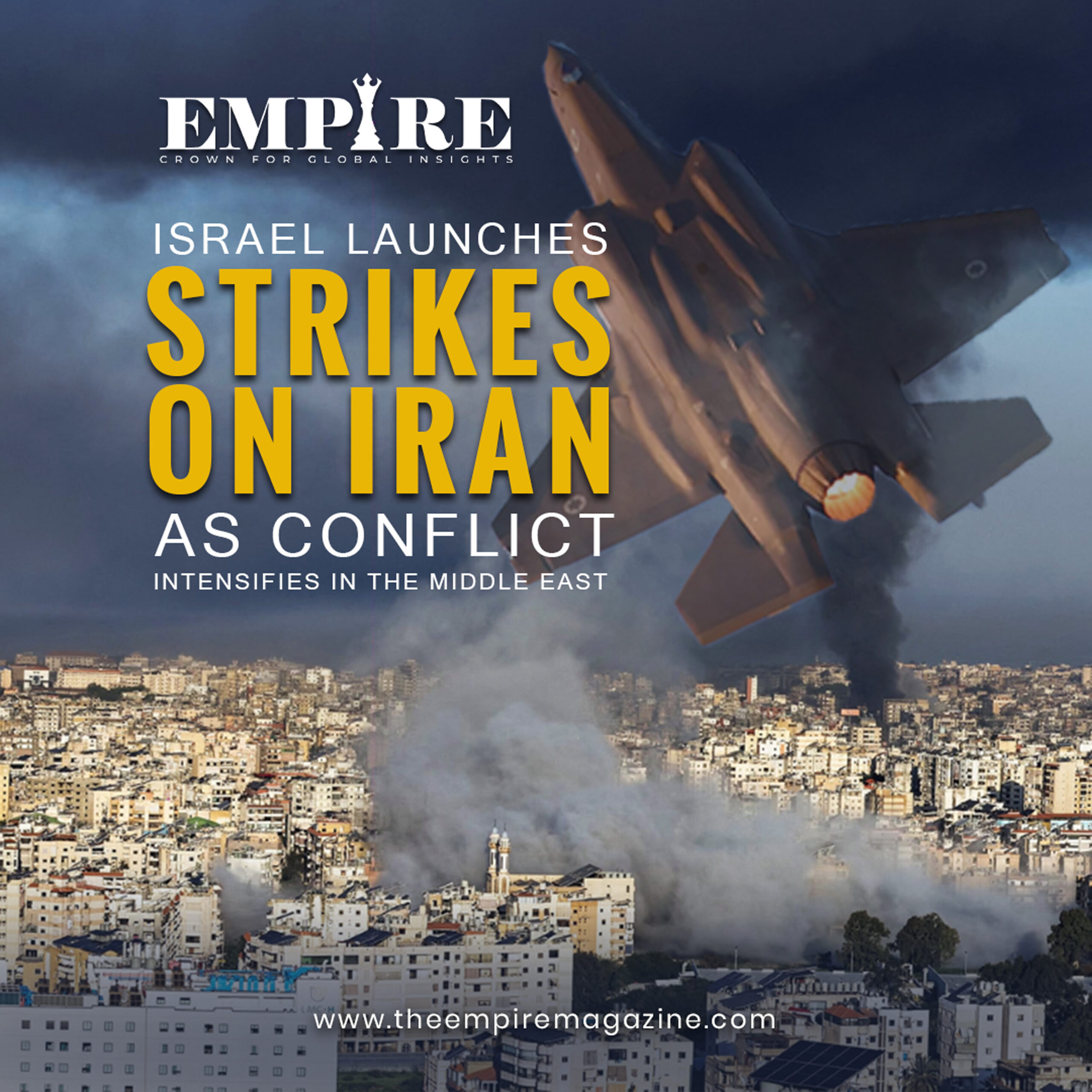
The phrase “Israel Launches Strikes on Iran” has rapidly become one of the most searched and discussed topics in global geopolitics. As tensions between the two long-standing adversaries escalate, the Middle East once again finds itself at the center of international concern. Governments, investors, and security analysts are closely monitoring developments, aware that this confrontation could reshape regional stability and global markets.
A Major Escalation in Military Tensions
The latest crisis began when Israel launched a coordinated military operation targeting key Iranian sites. The strikes reportedly focused on military infrastructure, missile facilities, and locations believed to be connected to Iran’s nuclear development program. Explosions were reported across multiple cities, including areas near Tehran, signaling one of the most significant escalations in recent years.
Israeli defense officials described the operation as a preventive measure aimed at weakening Iran’s strategic capabilities. For years, Israel has expressed concern that Iran’s ballistic missile expansion and nuclear advancements pose a direct security threat. Diplomatic negotiations surrounding Iran’s nuclear ambitions have faced repeated setbacks, increasing the likelihood of military confrontation.
The phrase Israel Launches Strikes on Iran now symbolizes more than a single operation. It represents a shift in regional dynamics and a possible turning point in Middle Eastern geopolitics.
The Role of the United States and Allied Forces
Reports indicate that the United States has played a strategic role in supporting the broader campaign. U.S. defense officials confirmed that numerous missile systems, drone installations, and strategic facilities connected to Iranian defense infrastructure have been targeted.
Military analysts suggest that nearly 2,000 targets have been struck since the operation began, making it one of the most extensive military offensives in the region in recent memory. The involvement of global powers has heightened fears that the conflict could expand beyond a bilateral confrontation.
International observers are carefully watching Washington’s next steps, aware that any deeper engagement could significantly alter the balance of power in the region.
Iran’s Retaliatory Response
In response, Iran launched retaliatory missile and drone strikes aimed at Israeli territory and allied military positions. Air defense systems were activated across several Israeli cities as sirens sounded and residents were instructed to seek shelter.
Although Israel’s advanced defense systems intercepted many incoming projectiles, some strikes resulted in infrastructure damage and injuries. The rapid exchange of attacks has intensified fears of a broader regional war.
The retaliation underscores the volatility of the situation. Each side appears determined to project strength, raising concerns that diplomatic solutions may become increasingly difficult to achieve.
Expanding Fronts Across the Region
The conflict has not remained limited to direct exchanges between Israel and Iran. Iranian-aligned groups in neighboring regions have also entered the confrontation. Hezbollah forces in Lebanon have reportedly launched rockets and drones toward Israeli positions, opening an additional front.
Israeli forces responded with strikes targeting military installations linked to these groups. The widening battlefield increases the risk of drawing additional countries and armed factions into the crisis.
Regional stability, already fragile due to existing conflicts, now faces further strain. Security analysts warn that if the conflict continues to expand, it could destabilize key alliances and alter longstanding geopolitical alignments.
Economic and Energy Market Impact
The economic consequences of the escalation are already visible. Global markets have reacted cautiously, particularly in the energy sector. The Middle East remains critical to global oil production and transportation routes.
The Strait of Hormuz, one of the world’s most vital oil shipping corridors, is under intense scrutiny. Any disruption to shipping lanes could significantly affect global energy supplies and drive oil prices higher.
Investors are responding to the uncertainty with increased volatility in financial markets. Analysts predict that prolonged instability could impact trade, investment confidence, and supply chains worldwide.
Humanitarian Concerns and Civilian Impact
Beyond military and economic implications, humanitarian concerns are mounting. Strikes in urban areas have caused damage to infrastructure and disrupted daily life for civilians on both sides.
Residents in parts of Iran reported hearing explosions and witnessing smoke rising from targeted areas. Meanwhile, Israeli communities have experienced repeated missile alerts, forcing thousands to seek shelter.
International humanitarian organizations are closely monitoring the situation, urging both sides to minimize civilian harm and respect international law.
For broader insights into how global conflicts influence international justice systems and policy evolution, readers can explore our feature on global transformation in governance:
https://theempiremagazine.com/rise-of-women-in-law-transforming-global-justice/
Diplomatic Efforts and Global Reactions
World leaders have called for restraint and renewed diplomatic dialogue. Several nations have urged both Israel and Iran to de-escalate and return to negotiations.
However, ongoing military operations suggest that immediate resolution may be unlikely. Security experts believe the coming weeks will be critical in determining whether the conflict remains contained or expands further.
The international community faces the challenge of balancing diplomatic pressure with strategic alliances. The situation requires careful coordination to prevent a larger regional war.
A Defining Moment in Middle Eastern Geopolitics
The headline Israel Launches Strikes on Iran now represents a defining chapter in modern Middle Eastern history. The confrontation highlights deep-rooted tensions surrounding nuclear ambitions, regional influence, and national security.
As governments assess their positions and markets adjust to uncertainty, the long-term consequences remain unclear. The outcome of this crisis could reshape political alliances, economic structures, and security policies across the region.
For now, the situation remains highly volatile. Military exchanges continue, diplomatic channels remain strained, and global concern grows with each development.
The world watches closely, aware that the decisions made in the coming days may determine the stability of an entire region.
– The Empire Magazine
Crown For Global Insights